
In our illustrative maintenance, repair and overhaul (MRO) negotiation, a counterparty replaces an invoice-based liability cap with twelve months of fees. An earlier contract uses two times the relevant invoice. Before reusing that position, counsel needs the amounts behind each cap and the condition recorded beside the earlier wording.
The earlier comment records acceptance of a cap of twice the relevant invoice with a specific uncapped carve-out. That gives the reviewer a condition to examine against the new request.
Calculate both caps before comparing them
The fictional MRO provider, Meridian, is reviewing a request from Crestline. Clause 5.1 replaces an invoice-based cap with fees paid during the previous twelve months. The earlier Altair version uses two times the relevant invoice. These are illustrative agreements, not customer results.
| Earlier Altair wording | Current Crestline request |
|---|---|
| Earlier Altair wording“two (2) times the value of the invoice rendered by Meridian for the Services giving rise to the claim” | Current Crestline request“the total fees paid by Customer to Meridian in the twelve (12) months immediately preceding the event giving rise to the claim” |
The multiplier does not tell you which monetary amount is larger. Calculate each base using the amounts the wording actually captures. The following hypothetical USD amounts demonstrate the difference; they are not values from the demo agreements.
| Relevant invoice | Fees paid in 12 months before the event | Cap at 2x invoice | Cap using 12 months of fees |
|---|---|---|---|
| Relevant invoice$100,000 | Fees paid in 12 months before the event$150,000 | Cap at 2x invoice$200,000 | Cap using 12 months of fees$150,000 |
| Relevant invoice$100,000 | Fees paid in 12 months before the event$500,000 | Cap at 2x invoice$200,000 | Cap using 12 months of fees$500,000 |
With the same invoice value, the twelve-month calculation produces a lower amount in the first case and a higher amount in the second. Calling the current request “a higher cap” before doing that calculation would skip the fact counsel needs.
Read the condition beside the cap
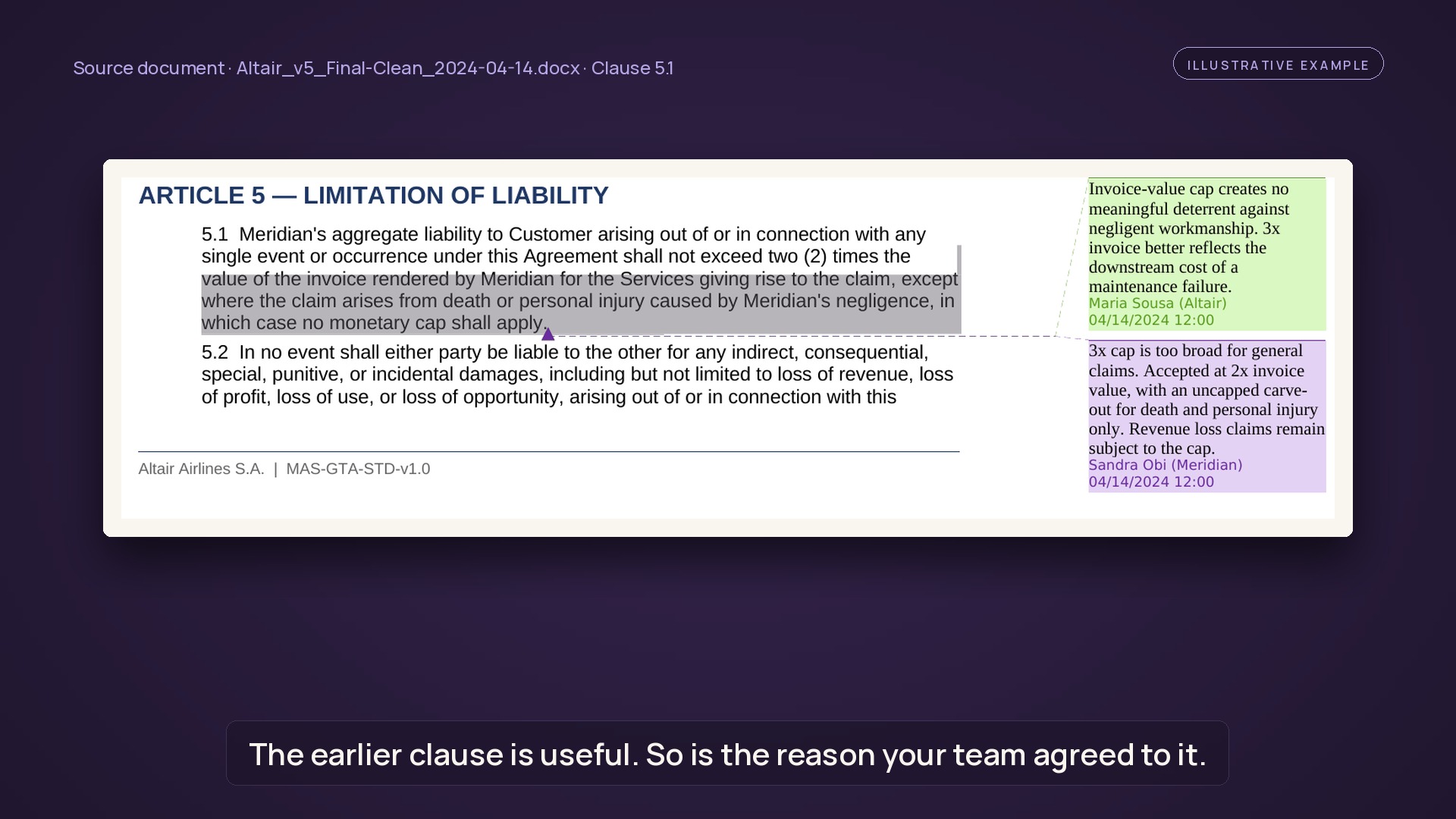
In the recorded Altair final version, clause 5.1 pairs the cap of twice the relevant invoice with an exception: no monetary cap applies where the claim arises from death or personal injury caused by Meridian’s negligence.
Sandra Obi, writing for Meridian, recorded this comment:
“3x cap is too broad for general claims. Accepted at 2x invoice value, with an uncapped carve-out for death and personal injury only. Revenue loss claims remain subject to the cap.”
That comment records Meridian’s position. The other balloon belongs to Maria Sousa of Altair and explains the counterparty’s request for three times the invoice. Keep the authors separate; a combined summary can blur what was requested and what Meridian was prepared to accept.
Check the comment against the whole liability article
The last sentence of Meridian’s comment deserves another look. It says revenue-loss claims remain subject to the cap. The displayed wording of clause 5.2 includes loss of revenue among the listed excluded damages.
The comment and the clause need to be read together. Counsel must check the complete provisions to determine which claims are excluded, which are capped and which fall within an uncapped exception. A recorded explanation does not resolve that legal analysis.
The filename “Final-Clean” does not establish that the document was executed. Check the signed agreement before treating the displayed wording as what the parties ultimately agreed.
What to check before reusing the earlier position
- Calculation base. Identify the relevant invoice and the fees paid in the stated lookback period. Calculate the amount under each formula, making any assumptions about the event date or fee total explicit.
- Exceptions and exclusions. Read the carve-outs with the rest of the liability article, including consequential-damages language.
- Recorded condition. Check who wrote the comment and what they were prepared to accept. Confirm that the source and version belong to that position.
- Current authority. Check today’s company instructions and the current deal’s terms before relying on an earlier compromise.
Use the earlier work while the decision is open
Lexsophos helps aviation legal and contracts teams examine earlier Word negotiations during review of a new redline. Its Precedent Engine brings earlier clauses, redlines and recorded comments into view, with the source file available for inspection.
In this example, the useful work continues after finding the cap: calculate the proposed amount, read the condition and reconcile the comment with the clause. Counsel decides whether to accept, reject or modify the current request.
at lexsophos.ai. We can examine the earlier wording, recorded comments and source using illustrative files. You do not need to send us your contracts.